


Karwa Chauth is one of the most cherished festivals in India, celebrated by married women who observe a day‑long fast for the well‑being and longevity of their husbands. The fast is unique — women refrain from food and water from sunrise until moonrise. While the ritual is demanding, tradition allows certain foods before and after the fast to maintain strength and devotion.
Understanding what can we eat in Karwa Chauth fast is essential for observing it correctly. The vrat diet emphasizes sattvik foods — pure, light, and nourishing — while avoiding heavy, processed, or tamasic items.
Pre‑Fast Meal (Sargi)
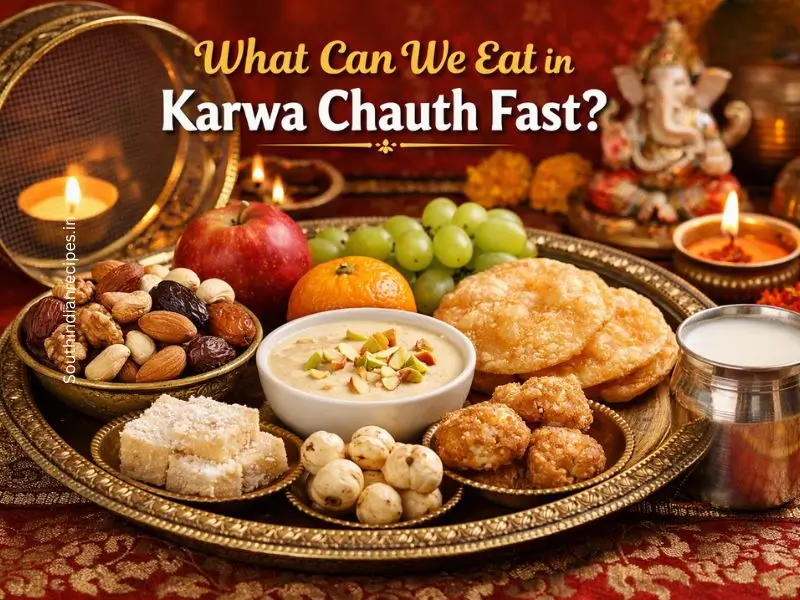
The pre‑dawn meal, known as sargi, is given by the mother‑in‑law and is crucial for sustaining energy throughout the day.
Foods in Sargi:
- Fruits – bananas, apples, pomegranate, papaya, grapes.
- Dry fruits – almonds, cashews, walnuts, raisins, dates.
- Sweets – coconut barfi, phirni, seviyan.
- Dairy – milk, paneer, curd.
- Paratha or puri – made with kuttu or singhara flour.
Foods Allowed After Moonrise (Breaking the Fast)
Once the moon is sighted and puja is performed, women break their fast with water and light sattvik foods.
Common Post‑Fast Foods:
- Milk and fruits – gentle on the stomach.
- Light sabzi – aloo, lauki, pumpkin cooked with sendha namak.
- Kheer or halwa – made from sama rice or makhana.
- Chapati or puri – from kuttu or singhara flour.
Foods to Avoid in Karwa Chauth Fast
- Onion, garlic, and non‑veg items.
- Grains like wheat, rice, oats, corn.
- Pulses and lentils.
- Packaged snacks, fried fast food, and aerated drinks.
Nutritional Tips for Karwa Chauth Fast
- Hydrate well before sunrise with water, milk, or herbal tea.
- Include energy‑rich foods like dry fruits and paneer in sargi.
- Avoid oily or spicy foods that cause discomfort during fasting.
- Break the fast with light, easily digestible foods.
Frequently Asked Questions (FAQs) on Karwa Chauth Fast Foods
Que 1: Can we eat fruits during Karwa Chauth fast?
Ans: Yes, fruits are essential in sargi and post‑fast meals.
Que 2: Can we eat dry fruits?
Ans: Yes, almonds, cashews, raisins, and dates are recommended.
Que 3: Can we eat sweets?
Ans: Yes, homemade sweets like seviyan, phirni, and barfi are allowed.
Que 4: Can we eat rice?
Ans: No, regular rice is avoided; sama ke chawal is used instead.
Que 5: Can we eat onion in karwa chauth?
Ans: No, both are prohibited.
Que 6: Can we eat paneer?
Ans: Yes, paneer is permitted and nutritious.
Que 7: Can we eat non‑veg?
Ans: No, non‑veg is strictly prohibited.
Que 8: Can we drink water during the Karwa Chauth fast?
Ans: No, water is not consumed during the fast. The discipline of abstaining from both food and water is what makes Karwa Chauth unique and spiritually significant.
Conclusion
Karwa Chauth fasting is a blend of devotion, tradition, and discipline. The foods allowed — fruits, dry fruits, dairy, kuttu, singhara, sama rice, and sattvik sabzi — ensure strength while maintaining purity. Avoiding grains, onion, garlic, and processed foods keeps the vrat spiritually aligned.
So, when you ask what can we eat in Karwa Chauth fast, remember: choose sattvik, wholesome foods that nourish the body and honor the Goddess. Each bite becomes a prayer, each meal a blessing.