


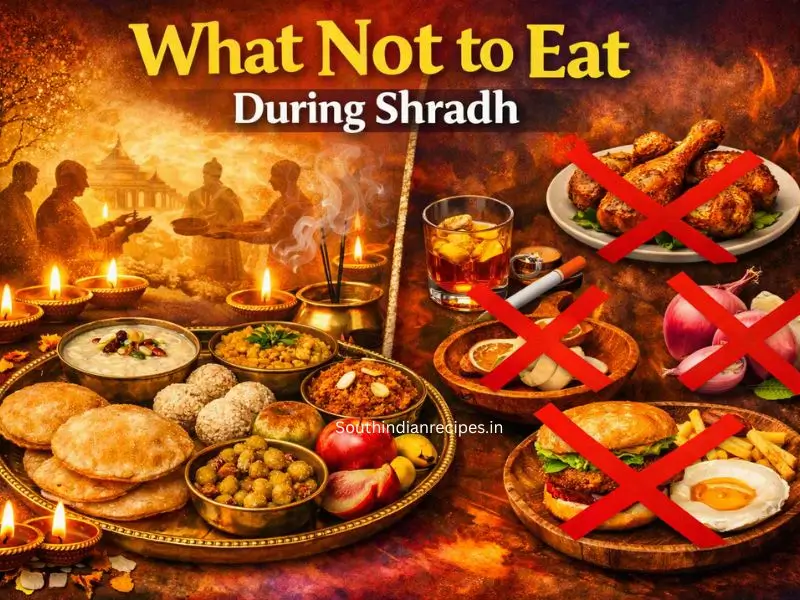
Shradh, or Pitru Paksha, is a solemn two‑week period in Hindu tradition devoted to honoring ancestors; it is a time of remembrance, gratitude, and spiritual discipline when families perform rites, offer food, and pray for the peace of departed souls.
But one question often arises — What not to eat during Shradh?
The answer lies in the essence of Shradh itself. This period is not meant for indulgence or celebration; it’s a time for simplicity, purity, and introspection. Food becomes a spiritual offering, not a feast. Every ingredient carries meaning, and every meal reflects devotion.
Let’s explore the foods that must be avoided during Shradh and understand the spiritual reasoning behind these restrictions.
The Spiritual Meaning of Shradh Food
Shradh rituals are performed to express gratitude toward ancestors and seek their blessings. The food offered during Shradh is considered prasadam — sacred nourishment meant for the soul.
Hence, it must be sattvik — pure, vegetarian, and spiritually uplifting. The idea is to maintain mental calmness and purity while performing rituals.
What Not to Eat During Shradh
| Food Type | Avoid Reason | Nature |
|---|---|---|
| Non‑Vegetarian Food (Meat, Fish, Eggs) | Considered tamasic and impure | Heavy & indulgent |
| Onion & Garlic | Tamasic, disturbs spiritual focus | Stimulating |
| Alcohol & Tobacco | Pollutes body and mind | Impure |
| Processed & Junk Food | Lacks purity and freshness | Artificial |
| Leftover Food | Considered stale and disrespectful | Impure |
| Fermented Food (Idli, Dosa, Bread) | Symbolizes decay | Not suitable for rituals |
| Spicy & Oily Food | Distracts from devotion | Overstimulating |
| Sweets with Eggs or Gelatin | Non‑vegetarian ingredients | Impure |
1. Non‑Vegetarian Food
Meat, fish, and eggs are strictly prohibited during Shradh. They are considered tamasic, meaning they increase aggression and desire — qualities opposite to the calmness Shradh requires.
Shradh is about purity and remembrance, not indulgence. Consuming non‑vegetarian food during this period is believed to disturb the sanctity of rituals.
2. Onion & Garlic
These ingredients are avoided because they are tamasic and rajasic — they stimulate the senses and emotions. Shradh rituals demand a sattvik state of mind, which onion and garlic disrupt.
Instead, meals are prepared with simple spices like cumin, turmeric, and coriander.
3. Alcohol & Tobacco
Alcohol and tobacco are considered impure and disrespectful during Shradh. They cloud the mind and weaken spiritual focus.
Shradh is a time for clarity, devotion, and gratitude — not indulgence or intoxication.
4. Processed & Junk Food
Packaged snacks, fast food, and processed items lack freshness and purity. Shradh food should be freshly prepared with devotion.
Avoid chips, biscuits, and bakery items containing preservatives or eggs.
5. Leftover Food
Food prepared for Shradh must be fresh. Leftovers are considered impure and unsuitable for offerings.
Always cook fresh meals before performing rituals.
6. Fermented Food
Fermented items like idli, dosa, and bread are avoided because they symbolize decay. Shradh rituals emphasize purity and freshness.
Instead, opt for simple sattvik dishes like poori, kheer, and dal.
7. Spicy & Oily Food
Excessively spicy or oily food distracts from devotion and causes restlessness. Shradh meals should be light, simple, and nourishing.
8. Sweets with Eggs or Gelatin
Many modern sweets and desserts contain eggs or gelatin. These are non‑vegetarian ingredients and must be avoided.
Traditional sweets like kheer, halwa, and ladoo are ideal.
What to Eat Instead
| Allowed Food | Examples | Symbolism |
|---|---|---|
| Sattvik Meals | Dal, Rice, Poori, Kheer | Purity & devotion |
| Fruits | Banana, Guava, Apple | Natural offering |
| Halwa | Sooji or Wheat | Gratitude |
| Pinda (Rice Balls) | Rice, Sesame, Ghee | Ancestor offering |
| Milk & Dry Fruits | Almonds, Dates | Nourishment |
Ritual Practices with Food
- Food is first offered to ancestors through pinda daan.
- A portion is given to Brahmins, cows, and crows.
- Meals are consumed after rituals, maintaining sattvik discipline.
- Cooking is done in clean vessels, often in earthen pots, to preserve sanctity.
Personal Reflection
In my kitchen, Shradh mornings are serene. The fragrance of kheer simmering in milk fills the air, and my grandmother’s words echo — “During Shradh, cook with devotion, not desire.”
We never used onion, garlic, or eggs. Instead, our meals were filled with sattvik dishes — poori, dal, halwa, and fruits. The simplicity of the food felt like a prayer in itself.
Shradh Food vs Festive Food
| Aspect | Shradh Food | Festive Food |
|---|---|---|
| Ingredients | No onion, garlic, meat, eggs | Rich & varied |
| Nature | Simple, sattvik | Elaborate & indulgent |
| Purpose | Ancestor offering | Celebration |
| Examples | Kheer, Dal, Poori, Fruits | Modak, Ladoo, Puran Poli |
Regional Shradh Food Traditions
| Region | Common Shradh Dishes |
|---|---|
| North India | Kheer, Poori, Dal, Halwa |
| Maharashtra | Puran Poli, Rice, Fruits |
| Tamil Nadu | Rice, Dal, Ghee offerings |
| Bengal | Payesh (Kheer), Fruits |
| Gujarat | Falahar Thali — Sabudana, Milk, Fruits |
Frequently Asked Questions (FAQs)
Que 1. Why are onion and garlic avoided?
Ans: They are tamasic and disturb spiritual focus.
Que 2. What sweets are ideal for Shradh?
Ans: Kheer, halwa, and ladoo made with ghee and jaggery.
Que 5. Can we eat fruits?
Ans: Yes, fruits are pure and ideal offerings.
Que 6. Why is food offered to crows and cows?
Ans: It symbolizes feeding ancestors and spreading blessings.
Also Read: What to Cook & Eat During Shradh | Traditional Shradh Food Guide
Conclusion
So, what not to eat during Shradh? Avoid non‑vegetarian food, onion, garlic, alcohol, and processed items. Choose sattvik meals that reflect purity and devotion.
Shradh is not about restriction — it’s about respect. Every meal prepared with sincerity becomes an offering of love and remembrance.
When you cook sattvik food during Shradh, you’re not just feeding yourself — you’re nourishing the bond between generations.
Celebrate Shradh with simplicity, gratitude, and purity — because true devotion is served best on a plate filled with respect and remembrance.