


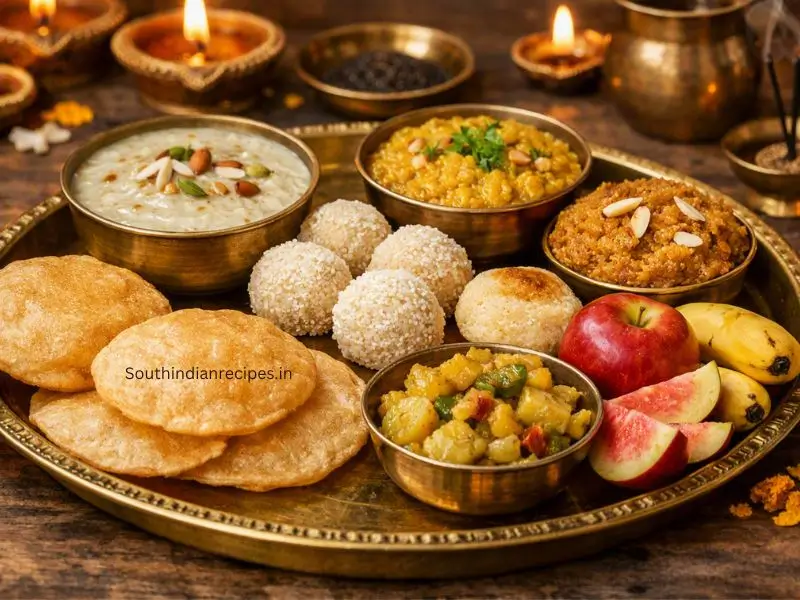
Shradh, also known as Pitru Paksha, is a sacred period in Hindu tradition dedicated to honoring ancestors. It is a time when families perform rituals, offer food, and pray for the peace of departed souls. Food plays a central role in Shradh — not for indulgence, but as a medium of remembrance and gratitude.
The question often arises: What to eat during Shradh? The answer lies in the principles of sattvik food — pure, simple, and spiritually aligned. Unlike festive thalis filled with sweets and rich dishes, Shradh food is humble, symbolic, and deeply respectful.
The Significance of Shradh (Pitru Paksha) Food
- Food offered during Shradh is called pinda prasad or pinda daan, symbolizing nourishment for ancestors.
- Meals are prepared without onion, garlic, meat, or alcohol.
- The emphasis is on simplicity, purity, and devotion.
- Offerings are made to Brahmins, cows, crows, and the needy — believed to carry blessings to ancestors.
What to Cook During Shradh
| Dish | Type | Symbolism |
|---|---|---|
| Kheer (Rice Pudding) | Sweet | Purity & devotion |
| Poori | Bread | Completeness & offering |
| Seasonal Vegetables | Savory | Simplicity & balance |
| Dal (Moong/Arhar) | Light protein | Nourishment |
| Pinda (Rice Balls) | Ritual food | Ancestor offering |
| Halwa (Sooji/Wheat) | Sweet | Gratitude |
| Fruits | Fresh offering | Natural purity |
1. Kheer — The Sacred Sweet
Prepared with rice, milk, and sugar, kheer is a staple in Shradh rituals. It symbolizes purity and is offered as prasadam.
2. Poori — Completeness in Offering
Wheat flour pooris fried in ghee are served with vegetables and dal. They represent fullness and devotion.
3. Seasonal Vegetables
Simple preparations of pumpkin, bottle gourd, or potato are common. Cooked without onion and garlic, they reflect humility and balance.
4. Dal — Light Nourishment
Moong dal or arhar dal is prepared lightly, symbolizing nourishment offered to ancestors.
5. Pinda — Ritual Rice Balls
Made from rice, sesame seeds, and ghee, pindas are offered during Shradh rituals as symbolic food for ancestors.
6. Halwa — Sweet Gratitude
Sooji or wheat halwa cooked in ghee and sugar is offered as a gesture of thankfulness.
7. Fruits — Natural Purity
Bananas, guavas, and seasonal fruits are offered, representing freshness and purity.
Ritual Practices with Food
- Food is first offered to ancestors through pinda daan.
- A portion is given to Brahmins, cows, and crows.
- Meals are consumed after rituals, maintaining sattvik discipline.
- Cooking is done in clean vessels, often in earthen pots, to preserve sanctity.
Personal Reflection
Growing up, Shradh in my family was marked by quiet mornings, the fragrance of kheer simmering, and the sight of pindas being offered with folded hands. My grandmother always said, “Food during Shradh is not for us, it’s for them — our ancestors.”
The simplicity of dal, poori, and halwa reminded us that devotion is expressed not through extravagance, but through humility.
Shradh Food vs Festive Food
| Aspect | Shradh Food | Festive Food |
|---|---|---|
| Ingredients | No onion, garlic, meat | Rich, varied |
| Nature | Simple, sattvik | Elaborate, indulgent |
| Purpose | Ancestor offering | Celebration |
| Examples | Kheer, Pinda, Dal | Modak, Ladoo, Puran Poli |
Rules of Eating During Shradh
- Avoid onion, garlic, meat, alcohol.
- Eat sattvik meals — dal, rice, vegetables, fruits.
- Meals should be simple and cooked with devotion.
- Food is consumed after offering to ancestors.
Frequently Asked Questions (FAQs)
Que 1. Why are onion and garlic avoided?
Ans: They are tamasic and believed to disturb spiritual focus.
Que 2. What sweets are prepared during Shradh?
Ans: Kheer and halwa are common offerings.
Que 3. Can fruits be offered?
Ans: Yes, seasonal fruits are considered pure and ideal.
Que 4. What is pinda daan?
Ans: Offering rice balls (pinda) to ancestors as symbolic nourishment.
Conclusion
So, what to cook and eat during Shradh? The answer lies in simplicity — kheer, poori, dal, halwa, fruits, and pindas. These sattvik foods are not just meals; they are offerings of love, remembrance, and gratitude.
Shradh food is about humility, purity, and devotion. When prepared with sincerity, even the simplest dish becomes sacred.
Celebrate Shradh with a thali that nourishes both body and soul — because true devotion is served best on a plate filled with purity and remembrance.