


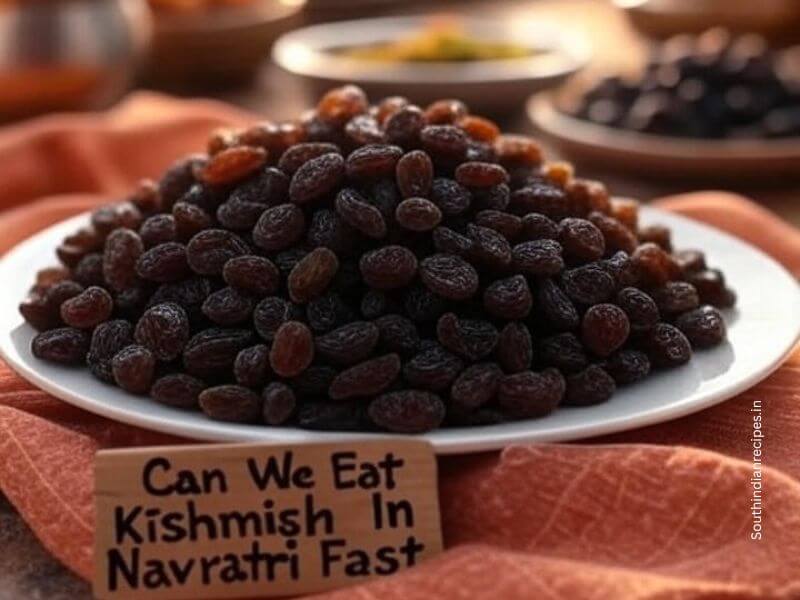
Navratri is a sacred nine-day festival dedicated to Goddess Durga, observed with devotion, discipline, and dietary restrictions. While many devotees follow a strict fasting regimen, questions often arise about specific foods—like kishmish (raisins).
So, can we eat kishmish during Navratri fast?
Many seasoned fasters include dry fruits like kishmish, almonds, and cashews in their Navratri diet. Kishmish is often added to vrat-friendly dishes like sabudana kheer, singhare ke halwa, or simply consumed as a snack for quick energy.
“I always carry a small box of raisins during Navratri. They’re sweet, energizing, and don’t break any fasting rules,” says Meena Sharma, a homemaker who observes all nine days of Sharad Navratri.
Nutritional Value of Kishmish
Kishmish is not just a sweet treat—it’s a powerhouse of nutrients:
- Natural sugars (fructose and glucose) for instant energy
- Iron for hemoglobin support
- Potassium for electrolyte balance
- Antioxidants for immunity
- Dietary fiber for digestion
During fasting, when meals are limited and energy dips are common, kishmish offers a natural boost without processed sugar.
What Fasting Guidelines Say
According to Times of India and TheHealthSite, dry fruits are allowed during Navratri fast, especially in the Falahar vrat style, which includes fruits, milk, and nuts. Kishmish falls under the category of naturally dried fruits, making it vrat-friendly.
However, it’s important to:
- ✅ Choose plain, unsweetened raisins
- ✅ Avoid flavored or sugar-coated varieties
- ✅ Consume in moderation to avoid excess sugar intake
Sensible Consumption Tips
Here’s how to include kishmish in your Navratri fast responsibly:
- ✅ Add to vrat recipes like sabudana kheer, singhare halwa, or fruit chaat
- ✅ Pair with nuts for sustained energy
- ✅ Soak overnight for better digestion and nutrient absorption
- ✅ Limit to 1–2 tablespoons per day to avoid sugar overload
- ✅ Avoid packaged mixes with added preservatives or salt
These tips align with the spiritual and nutritional goals of Navratri fasting—purity, simplicity, and balance.
| Aspect | Details |
|---|---|
| Allowed in fasting? | ✅ Yes, especially in Falahar vrat |
| Nutritional benefits | Iron, fiber, antioxidants, natural sugars |
| Best ways to consume | Soaked, added to kheer, halwa, fruit chaat |
| Precautions | Avoid flavored or sugar-coated raisins |
| Ideal quantity | 1–2 tablespoons per day |
Also Read: Can We Eat Dry Fruits in Fast? What Experts Want You to Know
Conclusion
Yes, kishmish is safe and suitable for Navratri fasting, provided it’s consumed in its natural form and in moderation. It aligns with the principles of falahar-based fasting, offering both spiritual purity and nutritional support.
In the spirit of Navratri, let your food be simple, sattvic, and soul-nourishing. Kishmish fits right in.