


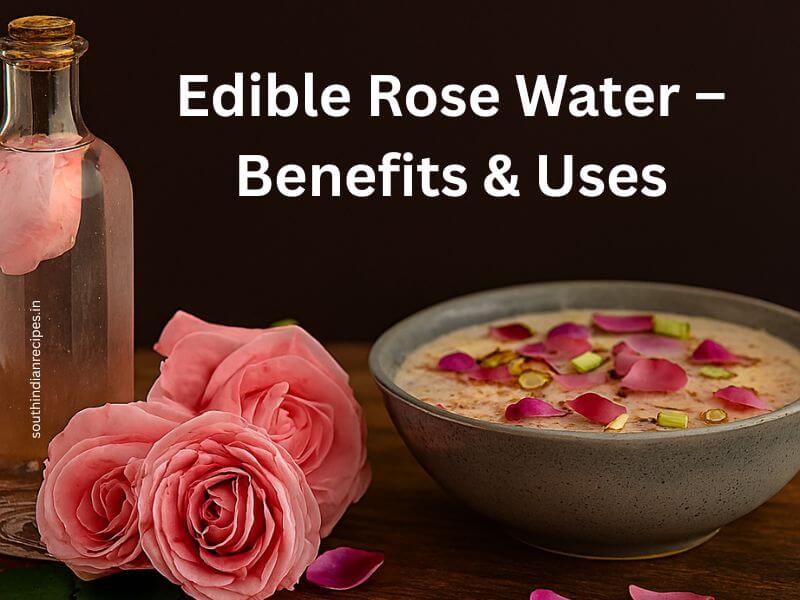
Edible rose water — known in India as Gulab Jal — is more than just a fragrant kitchen ingredient. It’s a centuries-old staple in Mughlai cuisine, Ayurveda, and Middle Eastern cooking, valued for its aroma, cooling properties, and therapeutic benefits. When made correctly, it’s steam-distilled from fresh rose petals and contains no artificial colors, flavors, or preservatives.
What is Edible Rose Water?
Edible rose water is a clear, aromatic liquid obtained by distilling rose petals in water. Unlike cosmetic rose water, which may contain additives, edible rose water is food-grade and safe for consumption. The best varieties are made from Damask roses or Kannauj roses, known for their intense fragrance and high antioxidant content.
How is it Made?
The traditional process involves:
- Harvesting fresh roses early in the morning before the sun reduces their aroma.
- Steam distillation — petals are placed in a copper still with water, heated gently, and the steam carries the rose essence into a condenser.
- Collection — the condensed liquid is pure rose water, free from synthetic fragrance or alcohol.
This method preserves the natural oils, antioxidants, and therapeutic compounds of the petals.
Health Benefits of Edible Rose Water
According to Medical News Today, pure edible rose water offers:
- Gut Cooling – Traditionally used in summer drinks to reduce body heat.
- Rich in Antioxidants – Helps protect cells from oxidative stress.
- Anti-inflammatory Properties – May soothe sore throats and mild digestive irritation.
- Mood Enhancer – Ayurveda considers rose a natural antidepressant.
- Hormonal Support – Some traditional texts suggest it may help ease PMS discomfort.
- Mild Antibacterial Action – Can support oral and digestive health.
Culinary Uses
Edible rose water is incredibly versatile in the kitchen:
1. Desserts
- Kheer & Phirni – A few drops add a luxurious floral note.
- Gulab Jamun – Enhances the syrup’s aroma.
- Cakes & Pastries – Pairs beautifully with vanilla, pistachio, and almond flavors.
2. Beverages
- Lassi & Falooda – A cooling summer treat.
- Sharbat & Lemonade – Adds a refreshing twist.
- Cocktails & Mocktails – Works well with gin, vodka, or sparkling water.
3. Savoury Dishes
- Biryani – A spoonful in saffron-yogurt mix elevates the aroma.
- Persian Stews – Complements spices like saffron and cardamom.
How to Choose the Best Edible Rose Water
When buying, look for:
- Labelled “Edible” or “Food Grade” – Cosmetic rose waters are not safe to drink.
- Steam or Hydro-Distilled – Avoid synthetic fragrance-based products.
- No Artificial Colors or Preservatives – Pure rose water is clear, not pink.
- Trusted Brand or Source – Established brands like Hamdard, Mitti Essentials, or Homegrown Platter have consistent quality.
Storage Tips
- Keep in a cool, dark place away from sunlight.
- Refrigeration can extend freshness.
- Always use a clean spoon or dropper to avoid contamination.
Possible Side Effects of Edible Rose Water
While pure, food‑grade rose water is generally safe for most people when consumed in moderation, there are a few things to watch out for:
1. Allergic Reactions
- Some individuals may be allergic to roses or related plants.
- Symptoms can include skin rashes, itching, redness, or swelling.
- Rarely, ingestion may cause throat irritation or breathing difficulty in highly sensitive individuals.
2. Skin Irritation (When Used Topically)
- Even edible rose water can cause redness, stinging, or dryness in people with very sensitive skin.
- Always do a patch test before applying to skin.
3. Eye Irritation
- If rose water accidentally enters the eyes in concentrated form, it may cause burning or watering.
- Only use rose water in eyes if it’s sterile, ophthalmic‑grade, and recommended by a doctor.
4. Digestive Discomfort
- Overconsumption can lead to mild stomach upset, nausea, or diarrhea.
- This is more likely if the rose water contains additives or artificial flavoring.
5. Contamination Risk
- Low‑quality or improperly stored rose water can harbor microbial growth.
- Always choose sealed, reputable brands and store in a cool, dark place.
✅ Safe Use Tips
- Check the label for “edible” or “food‑grade.”
- Limit intake to a few drops or teaspoons per recipe.
- Avoid if you have a known rose allergy.
- Store properly to maintain freshness and prevent spoilage.
Frequently Asked Questions (FAQs) – Edible Rose Water
Que 1. Is All Rose Water Safe To Drink?
Ans: No. Many rose waters are made for cosmetic use and may contain alcohol, synthetic fragrance, or preservatives. Always check the label for “edible” or “food‑grade” before consuming.
Que 2. What Are The Health Benefits of Edible Rose Water?
Ans: Traditionally, it’s known to help cool the body, aid digestion, reduce mild inflammation, and uplift mood. It’s also rich in antioxidants that may support overall wellness.
Que 3. How Can I Use Edible Rose Water in Cooking?
Ans:
- Add a few drops to kheer, phirni, or gulab jamun syrup.
- Mix into lassi, lemonade, or falooda.
- Use in biryani for a subtle floral aroma.
- Blend into cakes, custards, or cocktails.
Que 4. How Much Rose Water Should I Use in Recipes?
Ans: A little goes a long way. Start with ½ to 1 teaspoon for most recipes and adjust to taste — too much can overpower the dish.
Que 5. Does Edible Rose Water Expire?
Ans: Yes. Most pure rose waters last 6–12 months if stored in a cool, dark place. Refrigeration can extend shelf life. Always check the expiry date on the bottle.
Que 6. Can I Make Edible Rose Water At Home?
Ans: Yes, by steam‑distilling pesticide‑free rose petals. However, commercial products often have more consistent quality and safety standards.
Que 7. Are There Any Side Effects?
Ans: It’s generally safe in small amounts. Overconsumption may cause mild nausea in sensitive individuals. Those allergic to roses should avoid it.
Que 8. What’s The Difference Between Damask And Kannauj Rose Water?
Ans:
- Damask roses: Known for intense fragrance and used in Middle Eastern & gourmet cooking.
- Kannauj roses: Grown in India, prized for their deep aroma and Ayurvedic uses.
Que 9. Where Can I Buy The Best Edible Rose Water In India?
Ans: Top options include Mitti Essentials, Hamdard Arq Gulab, VITRO, and Karmaas — all available on Amazon India and select gourmet or Ayurvedic stores.
Also Read: 11 South Indian Milkmaid Recipes To Satisfy Your Sweet Tooth
Final Thoughts
Edible rose water is a culinary gem — it transforms simple dishes into aromatic delights and offers gentle wellness benefits. From Mughlai biryanis to Persian sherbets, it’s a bridge between tradition and modern gastronomy. Choose a pure, steam-distilled variety, and you’ll taste the difference in every drop.