Fasting in India is not just a spiritual practice—it’s a mindful way of cleansing the body and soul. Whether it’s Navratri, Ekadashi, or Karva Chauth, devotees follow specific dietary rules to maintain purity and devotion. One common question that arises is: “Can we eat Kaju Katli during fast?”
As a South Indian recipes expert, I’ve often been asked this by readers and clients who love sweets but want to stay true to fasting traditions. Let’s explore the spiritual, nutritional, and practical aspects of eating Kaju Katli during fasts.
What Is Kaju Katli?
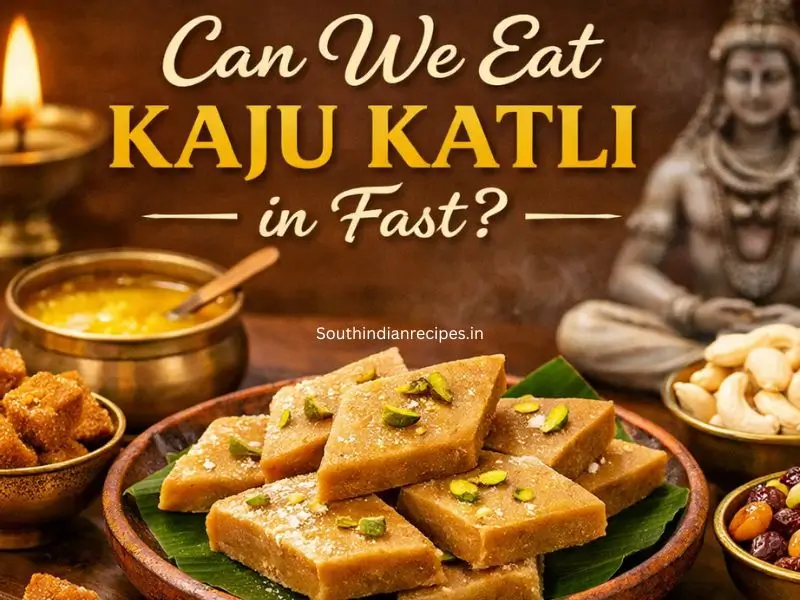
Kaju Katli (also known as Kaju Barfi) is a popular Indian sweet made from cashew nuts, sugar, and ghee. It’s rich, smooth, and melts in the mouth—often served during festivals like Diwali and Raksha Bandhan.
Traditional Kaju Katli contains:
- Cashews (Kaju): Ground into a fine paste or powder.
- Sugar syrup: Used for binding and sweetness.
- Ghee: Adds flavor and richness.
- Cardamom or saffron: Optional flavoring.
Spiritual Aspect of Fasting
During fasts, devotees avoid foods that are considered tamasic (heavy and indulgent) or rajasic (stimulating). The goal is to consume sattvic foods—those that promote calmness, purity, and devotion.
Kaju Katli, though vegetarian, is often considered rajasic because of its richness and sugar content. It may not align with the sattvic principles of fasting, especially if made with refined sugar or silver foil (varak) that isn’t pure.
However, if prepared with natural sweeteners like jaggery or dates and pure ghee, it can be made sattvic and suitable for fasting.
Nutritional Perspective
Cashews are nutrient-dense and provide:
- Healthy fats for sustained energy.
- Magnesium and zinc for metabolism.
- Protein for muscle repair.
But Kaju Katli is also high in sugar and calories. During fasting, the body’s metabolism slows down, and consuming heavy sweets can cause fatigue or bloating.
Expert Tip: If you crave sweets during fasts, opt for homemade Kaju Katli with jaggery or date-based laddoos instead of store-bought versions.
When Can You Eat Kaju Katli During Fast?
It depends on the type of fast and personal beliefs:
| Type of Fast | Can You Eat Kaju Katli? | Reason |
|---|---|---|
| Ekadashi | Avoid | Cashews are heavy and sugar is rajasic. |
| Navratri | Allowed (if sattvic) | Homemade version with jaggery and pure ghee is fine. |
| Karva Chauth | Allowed | Eaten after moonrise as a celebratory sweet. |
| Shravan Mondays | Limited | Small portion only if made with natural ingredients. |
Personal Touch – From My Kitchen
As a South Indian recipes expert, I often prepare fasting-friendly sweets for my family. My version of Kaju Katli uses:
- Cashew powder
- Organic jaggery syrup
- Desi ghee
- Cardamom powder
It’s lighter, sattvic, and perfect for Navratri or Shravan fasts. I also make coconut laddoos and amaranth payasam as alternatives for those who prefer variety.
Expert Tips for Fasting-Friendly Kaju Katli
- Use jaggery or dates instead of refined sugar.
- Avoid silver foil (varak) unless it’s certified vegetarian.
- Add cardamom or rose water for natural flavor.
- Limit portion size—one or two pieces are enough.
- Pair with fruits or milk for balanced energy.
Frequently Asked Questions (FAQs)
Que 1. Can We Eat Kaju Katli in Monday Fast?
Ans: Monday Fast (Somvar Vrat): Dedicated to Lord Shiva. Devotees usually consume fruits, milk, and satvik food prepared with senda namak.
Kaju Katli: Cashews are dry fruits, and milk is considered pure. Therefore, kaju katli is allowed in Monday fasts, provided it is prepared without additives like artificial silver foil or non-satvik ingredients.
Personal Note: In many households, kaju katli is even offered as prasad to Lord Shiva during Somvar Vrat.
Que 2. Can We Eat Kaju Katli in Shravan Fast?
Ans: Shravan Month: Considered highly auspicious for Lord Shiva devotees. Fasts are observed on Mondays and other days.
Food Rules: Grains, pulses, onion, garlic, and non-vegetarian food are avoided. Fruits, milk, and dry fruits are preferred.
Kaju Katli: Since it is made from cashews (dry fruits) and sugar, it is permissible. It aligns with the satvik diet followed in Shravan fasts.
Festival Expert Insight: I’ve seen families in North India prepare kaju katli along with coconut laddoos during Shravan as offerings.
Que 3. Can We Eat Kaju Katli in Ekadashi Fast?
Ans: Ekadashi Vrat: Observed twice a month, dedicated to Lord Vishnu. The strictest fast among all, where grains, pulses, and beans are prohibited.
Food Rules: Only fruits, milk, and dry fruits are allowed.
Kaju Katli: Allowed, since cashews are dry fruits. However, devotees should ensure the sweet does not contain grain-based additives or flour.
Practical Example: Many devotees prefer kaju katli or rajgira laddoos during Ekadashi as they provide energy while maintaining fasting discipline.
Que 4. Can I Eat Kaju Katli in Sawan Fast?
Ans: Sawan Month: Similar to Shravan, devotees observe fasts dedicated to Lord Shiva.
Food Rules: Only satvik food is consumed — fruits, milk, dry fruits, and dishes made with senda namak.
Kaju Katli: Permissible, provided it is prepared in a pure manner without restricted ingredients.
Observation: In Delhi and Uttar Pradesh, kaju katli is often distributed as prasad during Sawan fasts.
Que 4: Is kaju katli always considered satvik?
Ans: Yes, if prepared with cashews, sugar, and milk only.
Que 5: Can kaju katli be offered as prasad during fasts?
Ans: Yes, it is often offered to deities and distributed as prasad.
Que 6: Should packaged kaju katli be avoided?
Ans: Prefer homemade or trusted sources to ensure purity and avoid additives.
Also Read: Can We Eat Kaju in Navratri Fast: The Truth Will Surprise You!
Conclusion
So, can we eat Kaju Katli in fast? Yes, if it’s homemade, sattvic, and prepared with pure ingredients. Avoid store-bought versions that contain refined sugar or additives.
Fasting is about mindfulness and purity—both in thought and food. A simple, sattvic version of Kaju Katli can satisfy your sweet cravings while keeping your spiritual focus intact.
As a South Indian recipes expert, I believe fasting doesn’t mean deprivation—it’s an opportunity to rediscover balance, simplicity, and gratitude through food.