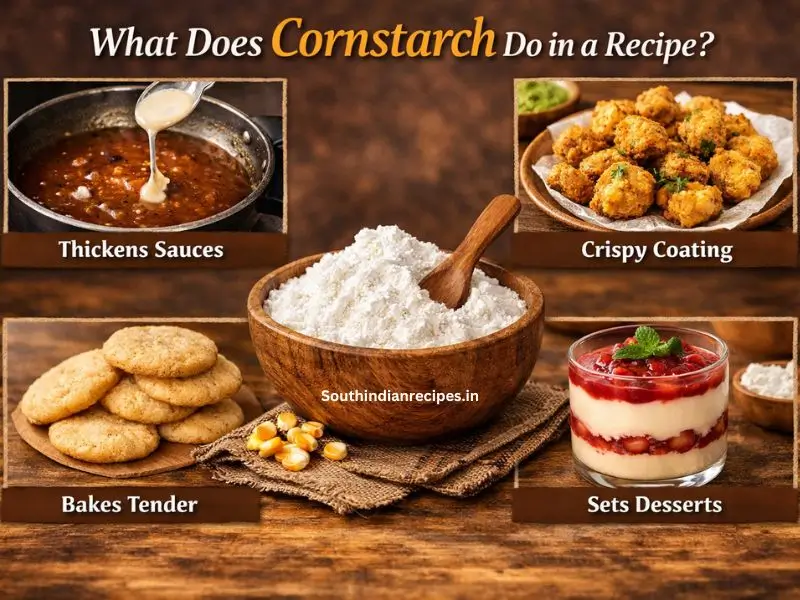
Cornstarch is a fine white powder made from the corn kernel endosperm; its key functional property is gelatinization — starch granules swell and trap water when heated, producing body and sheen in liquids. This makes it far more efficient than flour for quick thickening.
Primary Culinary Roles
- Thickener for sauces, gravies, and pie fillings. Make a slurry (1 part cornstarch : 2–3 parts cold liquid), whisk into simmering liquid and cook 1–2 minutes until clear and glossy. Cornstarch thickens faster and gives a clearer finish than flour.
- Crisp coating for frying. Mixed with rice flour or used alone, cornstarch yields a light, shatteringly crisp crust for pakoras, tempura, and shallow‑fried vegetables.
- Baking aid. Small amounts reduce gluten formation, producing tender cookies and delicate cakes (shortbread, sponge).
- Stabilizer. Custards, fruit fillings, and pie gels hold shape better when thickened with cornstarch.
Cornstarch vs Flour
| Attribute | Cornstarch | All‑purpose flour |
|---|---|---|
| Thickening power | ~2× flour | Baseline |
| Finish | Clear, glossy | Opaque, matte |
| Cooking time | Fast; brief boil | Longer; needs more cooking |
| Best for | Sauces, custards, frying | Roux, long stews |
Practical Tips, Pitfalls, and Substitutions
- Always make a slurry with cold liquid; adding dry cornstarch to hot liquid causes lumps. Cook briefly to remove raw taste.
- Freeze‑thaw caution: sauces thickened with cornstarch can break down after freezing; reheat gently and re‑thicken if needed.
- Substitution rule: cornstarch is about twice as powerful as flour — use roughly half the amount of cornstarch when replacing flour.
Benefits and limitations
- Benefits: stronger thickening per gram, glossy finish, crisp frying results, tender baked texture.
- Limitations: not ideal for long, slow cooking; can thin with prolonged simmering; may alter mouthfeel compared with flour.
Frequently Asked Questions (FAQs)
Que 1: Can cornstarch replace flour 1:1?
Ans: No — use about half the amount of cornstarch.
Que 2: Is cornstarch gluten‑free?
Ans: Yes, pure cornstarch is gluten‑free, but check labels for cross‑contamination.
Que 3: How to get a glossy gravy?
Ans: Use a cornstarch slurry added to simmering liquid and cook briefly.
Personal Note
In my kitchen I use cornstarch sparingly to give restaurant‑style gloss to sambar adaptations for plated service, and to make crispy banana‑flower pakoras by blending cornstarch with rice flour — the result is light, crisp, and stays crunchy longer than plain flour coatings.
Also Read: Can I Use a Cake Recipe for Cupcakes | Conversion Guide & Baking Tips
Conclusion
Cornstarch is a small pantry ingredient with outsized impact: used correctly as a slurry it gives fast, clear, glossy thickening for sauces and fillings; used dry it creates light, extra‑crisp coatings for frying; and used sparingly in baking it helps produce tender, delicate textures by limiting gluten formation. Respect its limits—avoid adding it dry to hot liquids, remember it’s stronger than flour (use about half the amount), and be cautious with freeze‑thaw applications—and you’ll get reliable, restaurant‑style results. From my experience cooking South Indian recipes, a measured spoon of cornstarch can turn a good gravy into a glossy, well‑set sauce or make pakoras stay crisp longer—small technique, big difference.