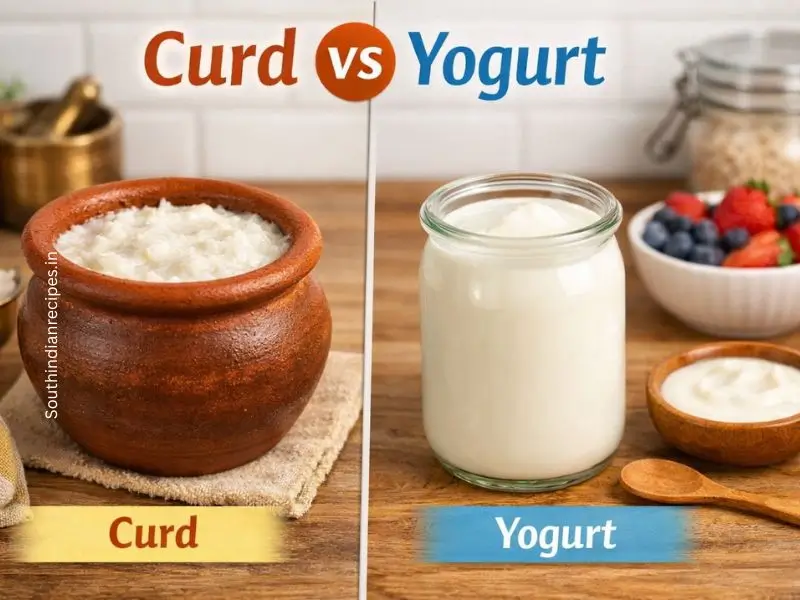
In most Indian homes, curd (dahi) is a daily staple — served with rice, parathas, or as cooling buttermilk. Yet, when you walk into a supermarket and see tubs labeled “yogurt,” it’s natural to wonder: is yogurt and curd the same?
As a food expert who has spent years experimenting with dairy fermentation, I can tell you that while both are milk-based and probiotic-rich, they’re not identical. The difference lies in how they’re made, the bacteria used, and the consistency. Understanding this helps you choose the right one for your health and recipes.
The Science Behind Fermentation
Both yogurt and curd are products of milk fermentation, but the process and cultures differ.
- Curd (Dahi): Made by adding a spoon of existing curd or lemon juice to warm milk. The bacteria multiply naturally, thickening the milk.
- Yogurt: Made using specific bacterial strains — Lactobacillus bulgaricus and Streptococcus thermophilus — under controlled temperature and time.
This controlled fermentation gives yogurt a consistent texture and flavor, while curd’s taste and thickness vary depending on climate and starter quality.
Key Differences Between Yogurt and Curd
| Aspect | Curd (Dahi) | Yogurt |
|---|---|---|
| Starter Culture | Natural or existing curd | Defined bacterial strains |
| Fermentation Control | Depends on room temperature | Controlled temperature (around 40°C) |
| Texture | Variable, sometimes grainy | Smooth and uniform |
| Taste | Tangy and slightly sour | Mild and creamy |
| Probiotic Content | Diverse but unpredictable | Standardized and consistent |
| Shelf Life | Short (2–3 days) | Longer (up to 10 days refrigerated) |
Why the Difference Matters
- Digestive Health: Both aid digestion, but yogurt’s standardized bacteria are proven to support gut health more consistently.
- Cooking Use: Curd is ideal for traditional dishes like kadhi, raita, and curd rice. Yogurt works better in smoothies, desserts, and marinades.
- Climate Sensitivity: In Indian summers, curd sets easily; in winters, yogurt makers help maintain ideal fermentation.
Examples from Everyday Cooking
| Dish | Best Choice | Reason |
|---|---|---|
| Curd Rice | Curd | Traditional flavor and texture |
| Smoothies | Yogurt | Creamy consistency and mild taste |
| Marinades | Yogurt | Controlled acidity for tenderizing |
| Buttermilk (Chaas) | Curd | Natural tang and freshness |
| Desserts (Shrikhand, Fruit Yogurt) | Yogurt | Smooth texture and stability |
Nutritional Comparison
| Nutrient | Curd (100g) | Yogurt (100g) |
|---|---|---|
| Calories | 60–70 kcal | 65–75 kcal |
| Protein | 3.5–4g | 4–5g |
| Calcium | High | High |
| Probiotics | Variable | Consistent |
| Fat | Depends on milk type | Controlled (low-fat or full-fat options) |
Both are rich in calcium, protein, and probiotics, but yogurt offers more predictable nutritional value due to standardized production.
Expert Tips for Perfect Fermentation
- Use lukewarm milk (around 40°C) for setting curd.
- Avoid moving the container during fermentation.
- In winter, place the bowl near a warm spot or use a yogurt maker.
- For thicker yogurt, strain through muslin cloth after refrigeration.
- Always use fresh starter culture — old curd may lead to sour results.
Personal Experience
In my kitchen, I prepare both — curd for daily meals and yogurt for recipes. During summer, curd sets beautifully overnight in clay pots. But in winter, I rely on my Kent Yogurt Maker to maintain the right temperature.
The difference is clear: curd feels rustic and tangy, while yogurt is smooth and balanced. Each has its charm — one rooted in tradition, the other in precision.
Frequently Asked Questions (FAQs)
Que1. Can I use curd instead of yogurt in recipes?
Ans: Yes, but expect a tangier flavor and less consistency.
Q2. Is yogurt healthier than curd?
Ans: Both are healthy; yogurt offers standardized probiotics, while curd provides natural bacterial diversity.
Que 3. Can I make yogurt at home?
Ans: Yes, with a yogurt maker or by maintaining a steady temperature for 6–8 hours.
Que 4. Which is better for digestion?
Ans: Yogurt is slightly better for gut health due to defined probiotic strains.
Que 5. Can lactose-intolerant people eat curd or yogurt?
Ans: Yes, both contain reduced lactose, but yogurt is gentler on digestion.
Also Read: Are Yogurt Makers Worth It | Expert Review for Indian Kitchens
Conclusion
So, is yogurt and curd same? Not quite. They share a common origin — fermented milk — but differ in bacterial cultures, texture, and consistency.
Curd is traditional, spontaneous, and full of character. Yogurt is scientific, consistent, and globally standardized. Both nourish the body and soul — one connects you to heritage, the other to modern convenience.
In the end, whether you choose curd or yogurt, you’re embracing one of the healthiest, most versatile foods in Indian cuisine.