Janmashtami — the divine celebration of Lord Krishna’s birth — is a day of devotion, fasting, and purity. Homes across India glow with diyas, temples echo with bhajans, and devotees observe strict vrat (fasting) rituals. Amid these sacred customs, one question often arises: Can we drink tea in Janmashtami fast?
As a festival expert who has spent years studying Hindu fasting traditions, I’ve seen how modern habits like tea and coffee often clash with ancient sattvik principles. Fasting isn’t just about abstaining from food — it’s about cleansing the body and mind. Let’s explore whether tea aligns with the spiritual and dietary essence of Janmashtami.
The Spiritual Essence of Janmashtami Fast
Janmashtami marks the birth of Lord Krishna, the embodiment of divine love and wisdom. Devotees fast to purify their thoughts and express devotion. The food consumed during this fast must be sattvik — pure, light, and spiritually uplifting.
Allowed foods include:
- Fruits, milk, curd, butter, ghee
- Sabudana, singhara atta, kuttu atta
- Dry fruits and rock salt
Tea, however, falls under the tamasic category — stimulating and heavy — which contradicts the calm and purity expected during fasting.
Can We Drink Tea in Janmashtami Fast?
| Type of Tea | Allowed? | Reason |
|---|---|---|
| Regular Tea (with milk & sugar) | ❌ No | Contains caffeine and processed ingredients |
| Black Tea | ❌ No | Stimulating and acidic |
| Green Tea | ⚠️ Sometimes | Acceptable if plain and consumed moderately |
| Herbal Tea (Tulsi, Chamomile) | ✅ Yes | Natural, caffeine-free, and sattvik |
| Masala Tea | ❌ No | Contains spices like clove and cinnamon, considered heavy |
Why Regular Tea Is Avoided
Tea contains caffeine, which stimulates the nervous system and disrupts the calm state of fasting. It also increases acidity, especially on an empty stomach. Traditional fasting emphasizes mental peace and physical balance, which caffeine can disturb.
Moreover, tea is often prepared with iodized salt, processed sugar, and milk, all of which may not align with vrat purity unless specifically sattvik.
Health Perspective
- Acidity Risk: Tea on an empty stomach can cause acid reflux.
- Dehydration: Caffeine acts as a diuretic, reducing hydration.
- Energy Crash: Temporary alertness followed by fatigue.
- Better Alternatives: Milk, tulsi tea, or dry fruit shakes provide steady energy.
Sattvik Alternatives to Tea
| Drink | Ingredients | Benefits |
|---|---|---|
| Tulsi Tea | Tulsi leaves, hot water | Calms the mind and aids digestion |
| Milk with Cardamom | Warm milk, cardamom | Nourishing and sattvik |
| Dry Fruit Shake | Milk, almonds, dates | Energy-rich and filling |
| Lemon Water with Honey | Lemon, honey, water | Refreshing and hydrating |
| Buttermilk (Chaas) | Curd, water, rock salt | Cooling and digestive |
Personal Experience
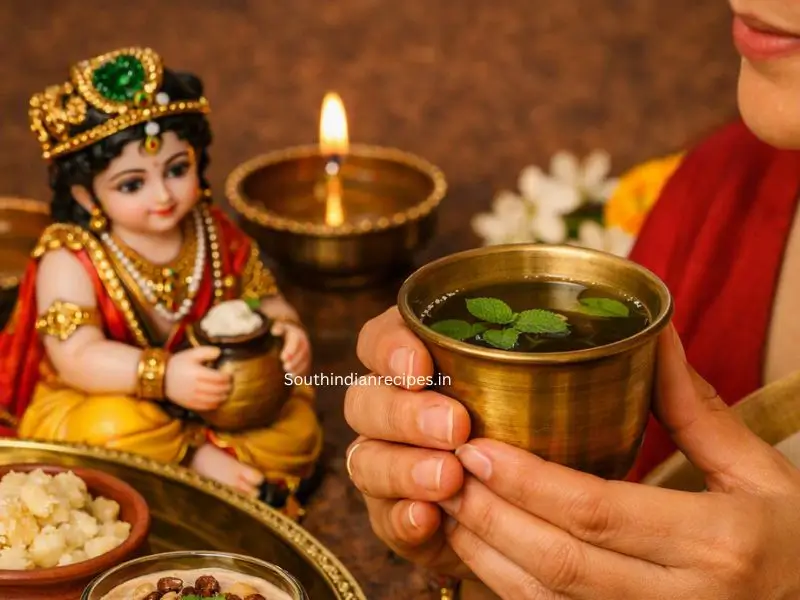
In my kitchen, Janmashtami mornings begin with tulsi tea instead of regular chai. My grandmother always said, “Krishna’s day is for calmness, not stimulation.” Over the years, I’ve realized that avoiding tea isn’t about restriction — it’s about aligning with the spirit of the fast.
The aroma of tulsi leaves in warm water feels more divine than caffeine ever could. It keeps the body light and the mind focused during prayers and midnight puja.
Rituals and Offerings
- Offer milk, butter, and curd to Lord Krishna during midnight puja.
- Avoid stimulants like tea and coffee.
- Decorate the puja thali with tulsi leaves and flowers.
- Consume sattvik foods like sabudana khichdi and makhan mishri.
Tea vs Sattvik Drinks
| Aspect | Tea | Tulsi Tea / Milk |
|---|---|---|
| Caffeine Content | High | None |
| Digestive Effect | Acidic | Gentle |
| Spiritual Alignment | Tamasic | Sattvik |
| Hydration | Low | High |
| Energy Stability | Temporary | Sustained |
Frequently Asked Questions (FAQs)
Que 1. Is tea completely prohibited during Janmashtami fast?
Ans: Yes, traditional vrat rules discourage tea due to its tamasic nature.
Que 2. Can I drink green tea?
Ans: Plain green tea may be acceptable in moderation, but herbal teas are preferred.
Que 3. What can replace tea during fast?
Ans: Tulsi tea, milk, or dry fruit shakes are ideal sattvik alternatives.
Que 4. Can children drink tea during fast?
Ans: No, it’s better to give them milk or fruit-based drinks.
Que 5. Is caffeine-free tea allowed?
Ans: Yes, if it’s herbal and made from natural ingredients like tulsi or chamomile.
Also Read: Can We Drink Coffee in Janmashtami Fast? — A Festival Expert’s Guide
Conclusion
So, can we drink tea in Janmashtami fast? Traditionally, no. Tea is considered tamasic and unsuitable for fasting. The purpose of Janmashtami vrat is to purify the body and mind — stimulants like tea contradict that goal.
Instead, choose sattvik alternatives like tulsi tea, milk, or dry fruit shakes. They nourish the body, calm the mind, and honor the sanctity of Lord Krishna’s birth.
In the end, fasting is not about deprivation but devotion. When you replace tea with pure, sattvik drinks, you celebrate Janmashtami in its truest spirit — with peace, purity, and love.