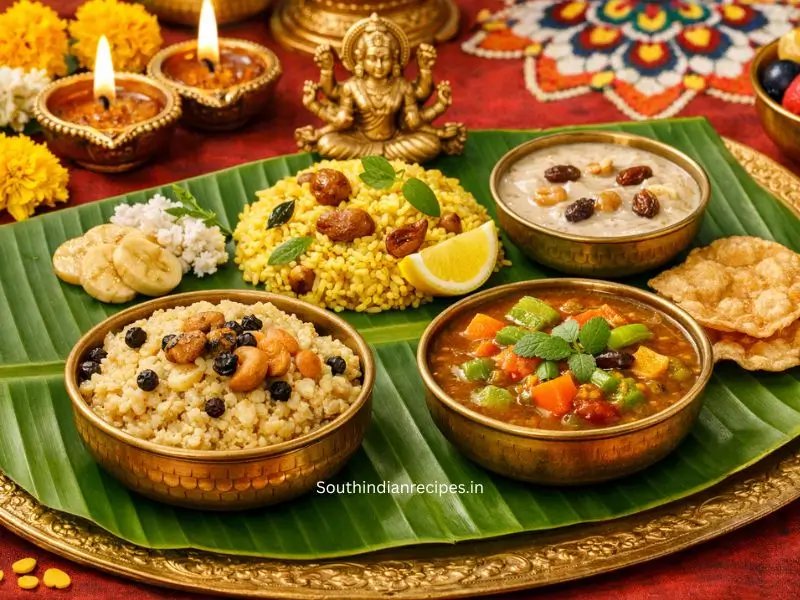
Navratri is not just a festival — it’s a spiritual journey celebrated through devotion, discipline, and food. In South India, each day of Navratri honors a different form of Goddess Durga, and the meals prepared reflect purity, balance, and gratitude.
As a food expert who grew up in a Tamil household, I’ve always seen Navratri as a time when the kitchen transforms into a sacred space. The aroma of coconut, curry leaves, and ghee fills the air, and every dish carries a story — of tradition, health, and devotion.
This guide brings together Navratri recipes for 9 days South Indian style, blending fasting-friendly ingredients with authentic regional flavors.
Day 1 — Shailaputri Devi
Dish: Samai Pongal (Little Millet Pongal)
- Made with little millet, moong dal, and ghee.
- Light, sattvik, and rich in protein.
Day 2 — Brahmacharini Devi
Dish: Sabudana Upma
- Tapioca pearls cooked with peanuts and curry leaves.
- Ideal for fasting; easy to digest.
Day 3 — Chandraghanta Devi
Dish: Kuttu Dosa
- Buckwheat dosa served with coconut chutney.
- Gluten-free and wholesome.
Day 4 — Kushmanda Devi
Dish: Pumpkin Kootu
- A mild curry made with pumpkin, coconut, and cumin.
- Symbolizes abundance and nourishment.
Day 5 — Skandamata Devi
Dish: Lemon Rice with Curd
- Tangy rice tempered with mustard seeds and curry leaves.
- Served with curd for balance and cooling.
Day 6 — Katyayani Devi
Dish: Vegetable Semiya Upma
- Vermicelli cooked with vegetables and ghee.
- Comforting and ideal for light fasting.
Day 7 — Kalaratri Devi
Dish: Sweet Potato Poriyal
- Cubed sweet potatoes sautéed with coconut and mustard seeds.
- Naturally sweet and energy-rich.
Day 8 — Mahagauri Devi
Dish: Coconut Payasam
- A festive dessert made with jaggery, coconut milk, and cardamom.
- Symbolizes purity and celebration.
Day 9 — Siddhidatri Devi
Dish: Mixed Vegetable Sambar
- A wholesome lentil stew with vegetables and tamarind.
- Served with steamed rice as the concluding meal.
Fasting vs Festive Recipes
| Day | Dish Type | Main Ingredient | Energy Level |
|---|---|---|---|
| Day 1 | Fasting | Little Millet | High |
| Day 3 | Fasting | Buckwheat | Moderate |
| Day 5 | Festive | Lemon Rice | High |
| Day 8 | Sweet | Coconut Milk | High |
| Day 9 | Festive | Lentils & Vegetables | Very High |
- Use rock salt (sendha namak) instead of regular salt.
- Avoid onion and garlic; focus on sattvik ingredients.
- Prefer cold-pressed oils or ghee for purity.
- Include millets and root vegetables for balanced nutrition.
- Offer each dish as prasadam before serving.
Suggested Thali for Each Day
A balanced Navratri thali can include:
- One grain-based dish (millet or rice)
- One vegetable curry or poriyal
- One sweet (payasam or halwa)
- One cooling element (curd or buttermilk)
Personal Touch
During Navratri, my kitchen becomes a space of calm and creativity. I prepare Samai Pongal on the first day — the aroma of ghee and pepper reminds me of my grandmother’s temple offerings. By the ninth day, the Vegetable Sambar feels like a culmination of devotion and flavor. Each meal is not just food; it’s a prayer served on a plate.
Frequently Asked Questions (FAQs)
Que 1. Can I use regular rice instead of millets?
Ans: Yes, but millets are preferred for their lightness and nutritional value.
Que 2. Are these recipes suitable for fasting?
Ans: Yes, all dishes are sattvik and fasting-friendly.
Que 3. Can jaggery be replaced with sugar in payasam?
Ans: Yes, but jaggery adds a traditional earthy sweetness.
Ans: Use ghee or cold-pressed coconut oil for purity and flavor.
Que 5. Can kids eat these dishes?
Ans: Absolutely. They’re mild, nutritious, and easy to digest.
Also Read: 10 Best South Indian Fireless Cooking Recipes One Should Try
Conclusion
Navratri recipes for 9 days South Indian style celebrate devotion through food — simple, pure, and nourishing. Each dish carries the essence of tradition, balancing taste and spirituality. From Samai Pongal to Coconut Payasam, these recipes bring the divine flavors of South India to your festive table.
Cooking during Navratri isn’t just about following rituals — it’s about embracing mindfulness, gratitude, and the joy of wholesome food.