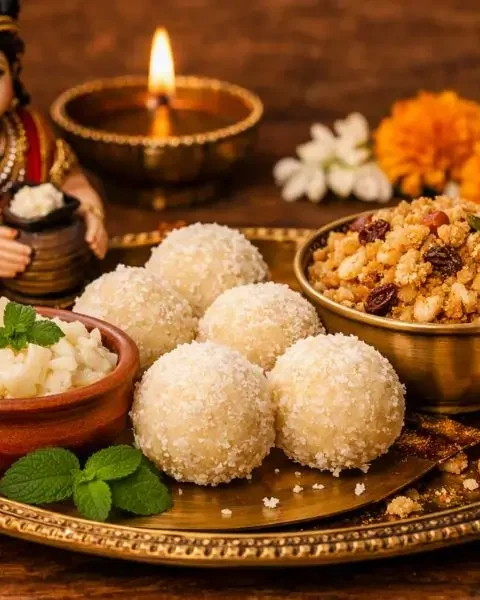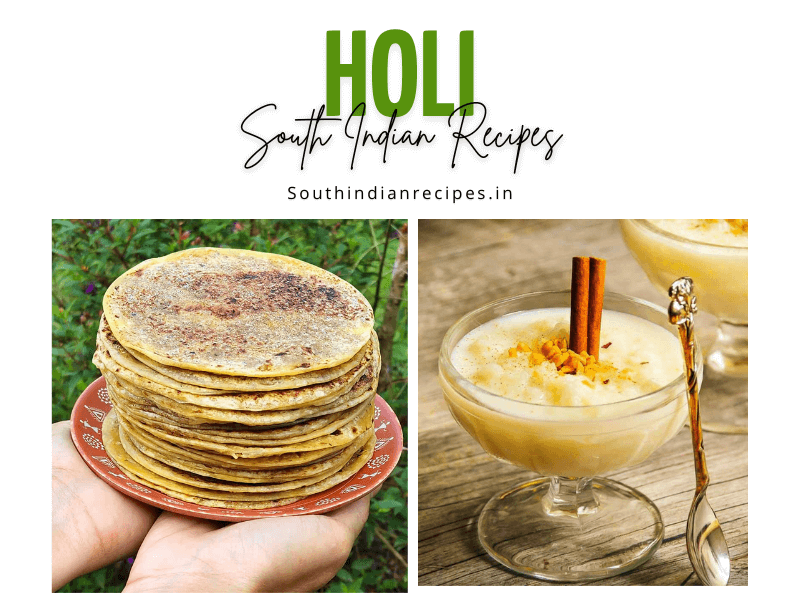
Holi, the festival of colors, is a celebration of joy, unity, and the triumph of good over evil. As the vibrant colors fill the air, it’s also a time to indulge in delicious treats that add to the festive spirit. South Indian cuisine, with its diverse flavors and aromatic spices, offers a unique and delightful culinary experience during Holi.
5 Mouth-Watering South Indian Holi Recipes You MUST Try!
Here’s a collection of traditional and innovative South Indian recipes that will make your Holi celebrations even more special.
1. Coconut Poli (Kayi Obbattu)

Ingredients:
- 1 cup all-purpose flour
- A pinch of salt
- Water (as needed)
- 2 tablespoons ghee
- 1 cup grated coconut
- 1 cup jaggery
- 1/2 teaspoon cardamom powder
Instructions:
- Prepare the dough: In a mixing bowl, combine all-purpose flour, a pinch of salt, and water to form a soft dough. Add ghee and knead well. Let it rest for 30 minutes.
- Make the filling: In a pan, heat grated coconut and jaggery until the jaggery melts and combines with the coconut. Add cardamom powder and mix well.
- Shape the poli: Divide the dough into small balls. Flatten each ball and place a spoonful of the coconut-jaggery mixture in the center. Fold the edges and roll out into thin discs.
- Cook the poli: Heat a tawa (griddle) and cook the rolled-out poli on both sides until golden brown. Serve warm with a dollop of ghee.
2. Murukku

Ingredients:
- 1 cup rice flour
- 1/2 cup urad dal flour
- 1/4 teaspoon asafoetida
- 1/2 teaspoon sesame seeds
- 1 teaspoon cumin seeds
- Salt to taste
- Water (as needed)
- Oil for deep frying
Instructions:
- Prepare the dough: In a mixing bowl, combine rice flour, urad dal flour, asafoetida, sesame seeds, cumin seeds, and salt. Add water gradually to form a soft dough.
- Shape the murukku: Using a murukku press, shape the dough into spirals or desired shapes.
- Fry the murukku: Heat oil in a deep frying pan. Fry the shaped murukku until golden brown and crispy. Drain on paper towels and let cool.
3. Thandai Payasam

Ingredients:
- 1/2 cup basmati rice
- 1 liter milk
- 1/2 cup sugar
- 1 tablespoon thandai masala powder
- A handful of mixed nuts (cashews, almonds, pistachios)
- 1/2 teaspoon cardamom powder
Instructions:
- Cook the rice: Wash and soak basmati rice for 30 minutes. Cook the rice with 2 cups of water until soft.
- Prepare the payasam: In a heavy-bottomed pan, bring milk to a boil. Add the cooked rice and simmer on low heat until the mixture thickens.
- Add flavor: Stir in sugar, thandai masala powder, mixed nuts, and cardamom powder. Mix well and simmer for a few more minutes. Serve warm or chilled.
4. Tomato Rasam

Ingredients:
- 4 ripe tomatoes
- 1/4 cup toor dal
- 1 teaspoon tamarind paste
- 1 teaspoon rasam powder
- 1/4 teaspoon asafoetida
- A few curry leaves
- 1/2 teaspoon mustard seeds
- 2 dried red chilies
- Salt to taste
- Water (as needed)
- Chopped coriander leaves for garnish
Instructions:
- Cook the dal: Wash and cook toor dal until soft. Mash it well and set aside.
- Prepare the rasam: In a pan, boil tomatoes with water until soft. Blend the tomatoes into a smooth puree.
- Combine ingredients: In a pot, combine tomato puree, mashed dal, tamarind paste, rasam powder, asafoetida, and salt. Bring to a boil and simmer for 10 minutes.
- Temper the rasam: In a small pan, heat oil and add mustard seeds, dried red chilies, and curry leaves. Pour the tempering over the rasam. Garnish with chopped coriander leaves.
5. Medu Vada

Ingredients:
- 1 cup urad dal
- 1 small onion (finely chopped)
- 2 green chilies (finely chopped)
- 1/2 teaspoon cumin seeds
- A few curry leaves (finely chopped)
- Salt to taste
- Oil for deep frying
Instructions:
- Soak and grind the dal: Wash and soak urad dal for 4-5 hours. Drain and grind into a smooth batter with minimal water.
- Prepare the batter: In a mixing bowl, combine the batter with chopped onions, green chilies, cumin seeds, curry leaves, and salt. Mix well.
- Shape and fry the vada: Heat oil in a deep frying pan. Take small portions of the batter, shape into round vadas with a hole in the center, and fry until golden brown and crispy. Drain on paper towels and serve hot.
How Do Holi Recipes Differ in South India?
South India, with its rich culinary diversity, offers a unique twist to Holi celebrations. While North India is known for its sweets and snacks, South Indian Holi recipes focus on traditional flavors, often highlighting rice, coconut, and lentils. Here are some regional variations of Holi recipes in South India:
Tamil Nadu
1. Coconut Poli (Thengai Poli): A sweet flatbread filled with a mixture of grated coconut, jaggery, and cardamom, cooked on a tawa with ghee.
2. Kuzhi Paniyaram: Savory or sweet dumplings made from fermented rice and urad dal batter, cooked in a special paniyaram pan.
3. Paruppu Vada: Crispy lentil fritters made from chana dal, flavored with onions, green chilies, and curry leaves.
Kerala
1. Ada Pradhaman: A traditional payasam (kheer) made with rice ada (rice flakes), jaggery, coconut milk, and flavored with cardamom and dry fruits.
2. Unniyappam: Sweet rice dumplings made from a batter of rice flour, jaggery, banana, and coconut, deep-fried to perfection.
3. Achappam: Crispy and sweet rosette cookies made from rice flour, coconut milk, and flavored with sesame seeds and cumin.
Karnataka
1. Holige (Obbattu): A sweet flatbread filled with a mixture of chana dal and jaggery, flavored with cardamom, and cooked on a tawa with ghee.
2. Rava Kesari: A popular sweet made from semolina, sugar, ghee, and flavored with saffron and cardamom.
3. Chakkuli: Savory spirals made from a dough of rice flour and urad dal, flavored with sesame seeds and cumin, deep-fried until crispy.
Andhra Pradesh and Telangana
1. Bobbatlu (Puran Poli): A sweet flatbread filled with a mixture of chana dal and jaggery, similar to the Karnataka version but with regional variations in the filling.
2. Poornam Boorelu: Sweet lentil dumplings made from a batter of rice and urad dal, filled with a mixture of chana dal and jaggery, and deep-fried.
3. Pulihora: A tangy tamarind rice dish flavored with peanuts, curry leaves, and spices, often served during festive occasions.
What Are Other Regional Variations of Holi Recipes South Indian?
Holi celebrations vary across India, and so do the delicious treats! Here are some regional variations of Holi recipes that bring unique flavors to the festival:
North India
1. Gujiya: A sweet dumpling filled with khoya (milk solids), dry fruits, and coconut, deep-fried to golden perfection.
2. Thandai: A chilled drink made from a blend of nuts, spices, and milk, often infused with a hint of saffron.
3. Dahi Bhalla: Soft lentil dumplings soaked in yogurt and topped with tangy tamarind chutney and spices.
West India
1. Puran Poli: A sweet flatbread filled with a mixture of jaggery and chana dal, popular in Maharashtra.
2. Shrikhand: A creamy yogurt-based dessert flavored with cardamom and saffron, garnished with nuts.
3. Bhakarwadi: A savory spiral snack made from gram flour and spices, deep-fried to a crisp.
East India
1. Malpua: A sweet, deep-fried pancake soaked in sugar syrup, often flavored with fennel seeds and cardamom.
2. Rasgulla: Soft and spongy cheese balls soaked in sugar syrup, a famous Bengali delicacy.
3. Patishapta: A traditional Bengali crepe filled with a mixture of coconut, jaggery, and khoya.
South India
1. Payasam: A creamy and sweet rice pudding made with milk, jaggery, and flavored with cardamom and nuts.
2. Adirasam: A deep-fried sweet made from rice flour and jaggery, resembling a doughnut in texture.
3. Kozhukattai: Sweet rice dumplings filled with coconut and jaggery, often steamed to perfection.
Central India
1. Mawa Kachori: A sweet and rich pastry filled with khoya, dry fruits, and sugar, deep-fried until golden.
2. Sabudana Khichdi: A savory dish made from tapioca pearls, peanuts, and spices, often enjoyed during fasting.
3. Bafla: A baked wheat flour dumpling served with ghee and spicy lentil curry.
What Is The Significance of Holi in South Indian culture?
Holi, known as the festival of colors, is celebrated with much joy and enthusiasm across India. While it is not as prominently observed in South India as in the northern states, it still holds significant cultural and social importance in the region. Here’s a look at the significance of Holi in South Indian culture:
Cultural Significance
1. Symbol of Unity and Joy: Holi brings together people from various communities, fostering unity and camaraderie. It is a time to forget past grievances and celebrate together, strengthening social bonds.
2. Harvest Festival: In many parts of South India, Holi coincides with the harvest season. It is a time to give thanks for a bountiful harvest and seek blessings for future prosperity.
3. Traditional Customs: While the colorful celebrations are more subdued compared to North India, South Indian communities observe traditional customs such as lighting bonfires (similar to Holika Dahan) to mark the triumph of good over evil.
Religious Significance
1. Worship of Kamadeva: In South India, Holi is also associated with the worship of Kamadeva, the god of love. According to legend, Kamadeva was incinerated by Lord Shiva’s third eye when he tried to disrupt Shiva’s meditation. Holi is celebrated as a tribute to Kamadeva’s sacrifice for the sake of love.
2. Poojas and Rituals: Many South Indian families perform special poojas (prayers) and rituals during Holi to seek blessings for health, happiness, and prosperity.
Culinary Significance
1. Festive Delicacies: Holi is an occasion to indulge in traditional South Indian delicacies. Families prepare special dishes like coconut poli, payasam, murukku, and adirasam, adding a unique culinary flavor to the celebrations.
2. Sharing and Bonding: The exchange of sweets and delicacies with friends, neighbors, and relatives is a cherished tradition. It symbolizes love, respect, and the spirit of togetherness.
Modern Celebrations
1. Community Gatherings: In urban areas and cosmopolitan cities, Holi is celebrated with vibrant community gatherings, color-throwing events, and cultural programs. It is an opportunity for people to come together and celebrate the joyous occasion.
2. Inclusive Festivities: Holi celebrations in South India have become more inclusive over time, with people from different cultural backgrounds participating in the festivities, making it a truly pan-Indian celebration.
Also Read: Overlooked, But Delicious South Indian Recipes Without Onion and Garlic
Conclusion
As we wrap up our delicious journey through South Indian Holi recipes, it’s clear that these vibrant dishes bring a unique and delightful twist to the festival of colors. From the aromatic flavors of coconut and curry leaves to the comforting textures of rice-based treats, these recipes not only celebrate the essence of South Indian cuisine but also add a festive spark to your Holi celebrations. Whether making these dishes for the first time or revisiting cherished family recipes, may your Holi be filled with the joy and warmth these culinary delights bring. Enjoy the flavors, the colors, and the moments with your loved ones. Happy Holi!