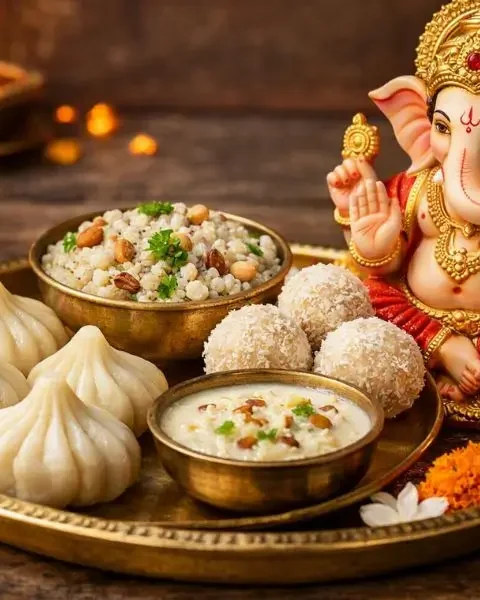
Sheetala Ashtami, also known as Basoda, is a Hindu festival dedicated to Goddess Sheetala Mata, observed on the eighth day of Krishna Paksha in the month of Chaitra. The unique tradition of this festival is the preparation and consumption of basi bhojan (food cooked a day before and eaten cold).
Families prepare a special Basoda food list that includes satvik dishes for Sheetala Mata. These recipes are not only culturally significant but also align with the cold food tradition Hindu festival practices, symbolizing purity, restraint, and devotion.
Traditional Sheetala Ashtami Recipes
1. Poori
- Ingredients: Wheat flour, ghee, sendha namak
- Preparation: Knead dough, roll into discs, and deep fry on Saptami.
- Significance: A staple in the Sheetala Ashtami vrat food list, symbolizing prosperity.
2. Aloo ki Sabzi
- Ingredients: Boiled potatoes, cumin, green chilies, sendha namak
- Preparation: Lightly sauté boiled potatoes with cumin and mild spices.
- Significance: A comforting satvik dish that pairs perfectly with poori.
3. Kala Chana
- Ingredients: Soaked black chickpeas, ginger, sendha namak
- Preparation: Boil soaked chana and season lightly.
- Significance: Rich in protein and fiber, part of the basi bhojan recipes tradition.
4. Besan ki Sabzi
- Ingredients: Gram flour, curd, cumin, coriander
- Preparation: Besan cooked with curd and spices until thickened.
- Significance: A cooling, protein‑rich dish included in the Basoda food list.
5. Sooji Halwa
- Ingredients: Semolina, ghee, sugar, cardamom
- Preparation: Roast sooji in ghee, add water and sugar, cook until fluffy.
- Significance: Sweet offering to Goddess Sheetala Mata, part of satvik dishes for Sheetala Mata.
6. Curd (Dahi)
- Ingredients: Homemade curd
- Preparation: Prepared a day before and set overnight.
- Significance: Cooling and digestive, essential in the Sheetala Ashtami vrat food tradition.
7. Rice or Khichdi
- Ingredients: Rice, moong dal, sendha namak
- Preparation: Cooked lightly with ghee and consumed cold.
- Significance: Light, nourishing, and part of the cold food tradition Hindu festival.
Why Cold Food is Eaten on Sheetala Ashtami
- Symbolic Cooling: Represents the healing nature of Goddess Sheetala Mata.
- Health Awareness: Eating cold food is believed to prevent heat‑related illnesses.
- Spiritual Discipline: Encourages restraint, simplicity, and respect for tradition.
Tips for Observing Sheetala Ashtami
- Cook all food on Saptami evening.
- Avoid reheating — food must be served cold.
- Use satvik ingredients (no onion, garlic, or regular salt).
- Offer food first to Sheetala Mata before consumption.
- Share meals with family and community to strengthen bonds.
Frequently Asked Questions (FAQs)
Que 1. Why is food cooked a day before Sheetala Ashtami?
Ans: Food is prepared a day earlier as a ritual offering to Goddess Sheetala Mata, symbolizing coolness, restraint, and devotion.
Que 2. Can onion and garlic be used in Sheetala Ashtami recipes?
Ans: No, only satvik ingredients are allowed. Onion, garlic, and non‑satvik spices are avoided.
Que 3. What is the significance of eating cold food on this day?
Ans: Cold food represents the cooling nature of Goddess Sheetala Mata and is believed to protect against seasonal diseases.
Que 4. Which dishes are most commonly prepared?
Ans: Poori, aloo sabzi, kala chana, sooji halwa, curd, and rice/khichdi are the most popular dishes in the Basoda food list.
Que 5. Is Sheetala Ashtami observed across India?
Ans: Yes, it is celebrated in many regions, especially in North India, with slight variations in basi bhojan recipes and rituals.
Conclusion
Sheetala Ashtami recipes reflect the deep cultural and spiritual values of this festival. The Basoda food list — from poori and aloo sabzi to kala chana and halwa — embodies simplicity, purity, and devotion. By preparing satvik dishes for Sheetala Mata a day in advance and consuming them cold, devotees honor the cold food tradition Hindu festival and seek blessings for health and protection.
These Sheetala Ashtami vrat food traditions remind us of the importance of restraint, community bonding, and reverence for age‑old customs. The practice of basi bhojan recipes is not just about food but about faith, discipline, and continuity of heritage.