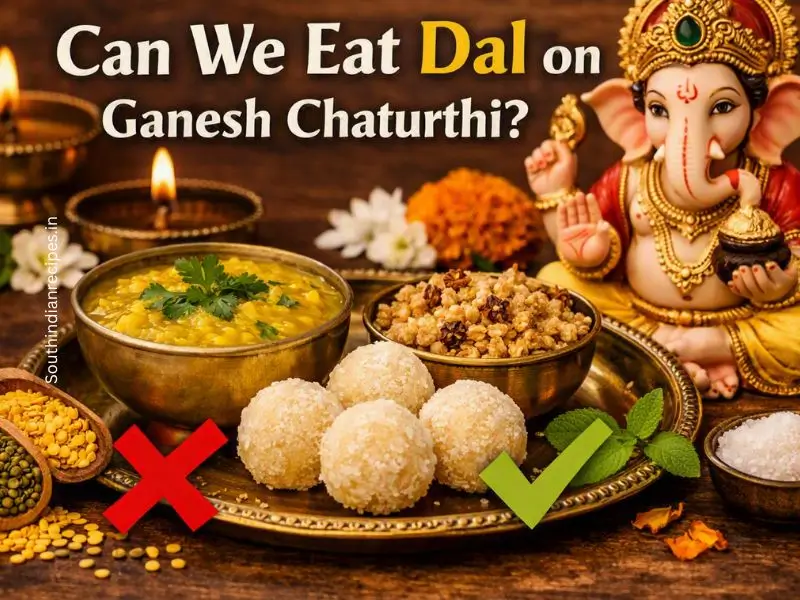
Ganesh Chaturthi — the grand celebration of Lord Ganesha’s birth — is a festival that unites devotion, tradition, and food. Homes across India fill with the aroma of modaks, jaggery, and ghee, while devotees observe fasts and rituals to honor the remover of obstacles. Amid these customs, one question often arises: Can we eat dal on Ganesh Chaturthi?
As a festival expert who has spent years studying Hindu rituals and culinary traditions, I’ve seen how food choices during Ganesh Chaturthi reflect spiritual discipline. Dal (lentils) is a staple in Indian kitchens, but its place in fasting rituals depends on the type of vrat (fast) and the regional customs you follow. Let’s explore this in depth.
The Spiritual Essence of Ganesh Chaturthi
Ganesh Chaturthi celebrates the birth of Lord Ganesha, the deity of wisdom, prosperity, and purity. Devotees observe fasts, perform puja, and offer sweets like modak, ladoo, and poha.
Fasting during this festival is not just about abstaining from food — it’s about cleansing the body and mind. The food consumed should be sattvik — pure, light, and free from onion, garlic, and meat.
Can We Eat Dal on Ganesh Chaturthi?
| Type of Dal | Allowed? | Reason |
|---|---|---|
| Toor Dal (Arhar) | ❌ No | Considered heavy and unsuitable for fasting |
| Moong Dal | ⚠️ Sometimes | Allowed in some regions after puja |
| Masoor Dal | ❌ No | Tamasic in nature, avoided during vrat |
| Chana Dal | ❌ No | Used in regular meals, not in fasting |
| Urad Dal | ❌ No | Heavy and not sattvik |
| Split Green Gram (Moong) | ✅ Yes (in limited quantity) | Light and sattvik, used in prasadam |
Why Dal Is Generally Avoided During Fasting
Dal is rich in protein and considered tamasic when cooked with spices or consumed in large quantities. Fasting food emphasizes simplicity and purity, focusing on ingredients like milk, fruits, sabudana, and kuttu flour.
However, in some households, moong dal is used in light preparations after the main puja — especially in South India, where moong dal payasam or moong dal ladoo is offered as prasadam.
Regional Variations
| Region | Fasting Practice | Dal Usage |
|---|---|---|
| Maharashtra | Strict vrat; only fruits, milk, and modak | Dal avoided |
| Tamil Nadu | Sattvik meals after puja | Moong dal used in payasam |
| North India | Fruits and vrat-friendly grains | Dal avoided |
| Gujarat | Light fasting meals | Moong dal sometimes used in sweets |
Sattvik Alternatives to Dal
| Food Item | Ingredients | Why It’s Better |
|---|---|---|
| Sabudana Khichdi | Sago, peanuts, potato | Light and energy-rich |
| Kuttu Poori | Buckwheat flour | Gluten-free and sattvik |
| Samak Rice | Barnyard millet | Ideal grain substitute |
| Fruit Salad | Seasonal fruits | Refreshing and pure |
| Paneer Curry | Cottage cheese, rock salt | Protein-rich and sattvik |
Rituals and Offerings
- Offer modak, coconut ladoo, and jaggery to Lord Ganesha.
- Avoid onion, garlic, and heavy pulses.
- Use rock salt (sendha namak) instead of regular salt.
- Decorate the thali with tulsi leaves and marigold flowers.
- Consume sattvik meals after the puja concludes.
Dal vs Sattvik Foods
| Aspect | Dal | Sattvik Foods |
|---|---|---|
| Nature | Tamasic (heavy) | Sattvik (light) |
| Digestibility | Moderate | Easy |
| Spiritual Alignment | Not ideal for fasting | Perfect for vrat |
| Common Use | Daily meals | Festival offerings |
| Examples | Toor, Masoor, Chana | Sabudana, Samak, Fruits |
Frequently Asked Questions (FAQs)
Que 1. Is dal completely prohibited on Ganesh Chaturthi?
Ans: Yes, most types are avoided, except moong dal in limited sattvik preparations.
Que 2. Can I eat dal after the puja?
Ans: Yes, light moong dal dishes can be consumed after the main rituals.
Que 3. What can replace dal for protein during fasting?
Ans: Paneer, milk, and dry fruits are excellent sattvik protein sources.
Que 4. Is moong dal ladoo allowed?
Ans: Yes, it’s considered sattvik and often offered as prasadam.
Que 5. Why is onion and garlic avoided?
Ans: They are tamasic and believed to disturb spiritual focus.
Conclusion
So, can we eat dal on Ganesh Chaturthi? Traditionally, no — dal is avoided during fasting as it’s considered heavy and tamasic. However, moong dal in light, sattvik forms like payasam or ladoo may be used after the puja.
Ganesh Chaturthi fasting is about purity, devotion, and simplicity. Choosing sattvik foods like sabudana, samak rice, and fruits aligns with the spiritual essence of the day.
In the end, what matters most is faith and intention. When you prepare food with devotion, even a simple dish becomes divine.