Navratri, meaning “nine nights,” is one of the most celebrated Hindu festivals, dedicated to worshipping the nine forms of Goddess Durga. Beyond devotion, Navratri is also a time of discipline, where fasting plays a central role. The vrat (fast) is not just about abstaining from food; it is a spiritual detox that aligns body, mind, and soul.
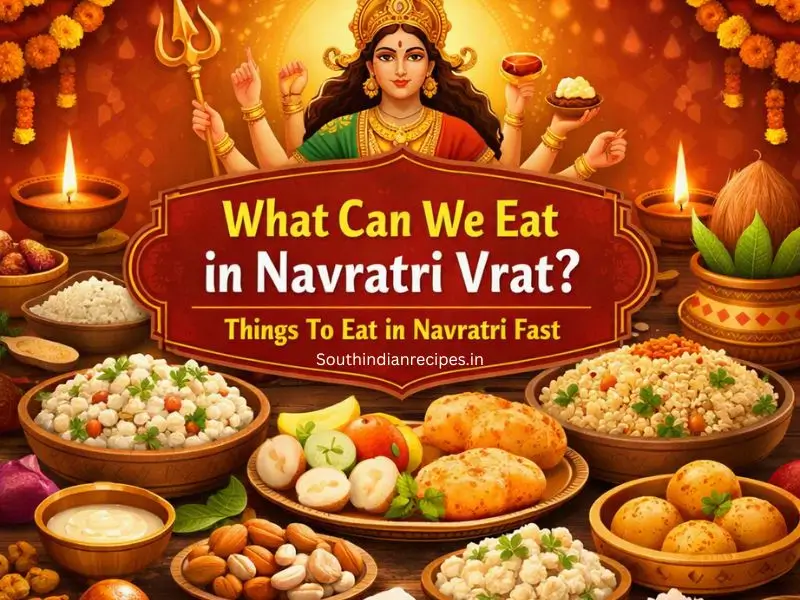
A common question is: What can we eat in Navratri vrat? The answer lies in the principles of sattvik living — consuming pure, light, and spiritually uplifting foods while avoiding tamasic and rajasic items.
| Category | Examples | Notes |
|---|---|---|
| Flours | Kuttu atta, Singhara atta, Rajgira atta, Sama ke chawal | Used for puri, pakora, pulao |
| Dairy | Milk, curd, paneer, ghee, butter | Rich in protein & energy |
| Fruits | Banana, apple, pomegranate, papaya, grapes, watermelon | All fresh fruits allowed |
| Vegetables | Potato, sweet potato, arbi, raw banana, pumpkin, lauki, cucumber, tomato (varies) | Cooked with sendha namak |
| Dry Fruits | Almonds, cashews, walnuts, raisins, makhana, coconut | Ideal for energy |
| Spices | Rock salt, cumin, black pepper, cardamom, cinnamon, cloves, ginger | Regular table salt avoided |
| Others | Sabudana, peanuts, jaggery, honey | Used in khichdi, kheer, chaat |
Foods to Avoid
- All grains: rice, wheat, oats, corn, barley, jowar, bajra
- Pulses & lentils: moong, masoor, urad, chana, rajma
- Onion & garlic: considered tamasic
- Non‑veg items: meat, fish, eggs
- Alcohol & tobacco
- Regular salt: only sendha namak is permitted
- Kuttu ki Puri – Deep‑fried bread made from buckwheat flour.
- Sabudana Khichdi – Tapioca pearls cooked with peanuts and potatoes.
- Singhara Halwa – Sweet dish made from water chestnut flour.
- Makhana Kheer – Fox nuts simmered in milk with dry fruits.
- Sama ke Chawal Pulao – Barnyard millet cooked with vegetables.
- Fruit Chaat – Seasonal fruits tossed with sendha namak.
Ritual Significance of Food
- Meals are prepared fresh and offered to the Goddess before consumption.
- Cooking is done without onion, garlic, or grains to maintain purity.
- Fasting is seen as a way to cleanse the body and strengthen devotion.
Frequently Asked Questions (FAQs)
Ans: No, only sama ke chawal (barnyard millet) is allowed.
Que 2. Is tomato permitted?
Ans: Traditions vary — some allow it, others avoid it.
Que 3. Can we eat paneer?
Ans: Yes, paneer is permitted and commonly used in vrat recipes.
Que 4. Why is sendha namak used instead of table salt?
Ans: It is considered pure and natural, unlike iodized salt.
Que 5. Can we drink tea or coffee?
Ans: Yes, but without grains or additives; moderation is advised.
Ans: Yes, black salt (kala namak) is permitted, though sendha namak is traditionally preferred.
Ans: No, brinjal (eggplant) is avoided during vrat.
Ans: No, chocolates with additives are not considered sattvik.
Ans: Yes, kalakand made from milk and sugar is allowed.
Ans: No, fenugreek (methi) is not used in vrat cooking.
Ans: No, oats are grains and not permitted.
Ans: Yes, ajwain (carom seeds) can be used sparingly.
Ans: Yes, arbi (colocasia) is allowed.
Ans: No, custard powder contains grains and additives.
Ans: No, processed chocolates are avoided.
Ans: Yes, flax seeds are allowed in moderation.
Ans: Yes, gulab jamun made from milk solids is permitted.
Ans: No, only sendha namak or kala namak is used.
Ans: No, peas are legumes and avoided.
Ans: Yes, but cold‑pressed oils or ghee are preferred.
Ans: Yes, sabudana is one of the most popular vrat foods.
Ans: No, sprouts are avoided.
Ans: Yes, sugar and jaggery are allowed.
Ans: Yes, sesame seeds are permitted.
Ans: Traditions vary — some families allow, others avoid.
Ans: Yes, almonds are allowed.
Ans: Yes, curry leaves can be used.
Ans: No, only simple spices like cumin, pepper, cardamom are used.
Ans: Yes, jaggery is allowed.
Ans: Yes, medicines should not be skipped.
Ans: Yes, radish is allowed.
Ans: Yes, peanuts are permitted.
Ans: No, poha is made from rice and avoided.
Ans: No, ragi is not allowed.
Ans: No, chana is a legume and avoided.
Ans: No, tamarind is avoided.
Ans: No, non‑veg is strictly prohibited.
Ans: Yes, bananas are allowed.
Ans: No, cauliflower is avoided.
Ans: No, chana is not permitted.
Ans: Yes, fennel seeds (saunf) are allowed and often used for flavor or digestion.
Ans: Yes, green chillies can be used in moderation.
Ans: No, hing (asafoetida) is avoided during vrat.
Ans: No, mustard seeds are not permitted.
Ans: Yes, olive oil can be used, though ghee or cold‑pressed oils are preferred.
Ans: No, onion is strictly avoided.
Ans: No, processed peanut butter is avoided, but plain roasted peanuts are allowed.
Ans: Yes, petha (ash gourd sweet) is permitted.
Ans: No, popcorn is made from corn which is not allowed.
Ans: No, leafy greens like spinach are avoided.
Ans: Yes, turmeric (haldi) is permitted.
Ans: Yes, amla (Indian gooseberry) is allowed.
Ans: No, pulses and dals are avoided.
Ans: No, dosa made from rice and dal is not permitted.
Ans: No, urad dal is avoided.
Ans: Allowed foods: kuttu, singhara, rajgira, sama rice, sabudana, potatoes, fruits, milk, paneer, makhana, dry fruits.
Ans: Potato, sweet potato, arbi, pumpkin, cucumber, bottle gourd, tomato (varies).
Ans: No, capsicum is avoided.
Ans: There is no fixed limit; devotees eat once or twice a day depending on tradition.
Ans: No, quinoa is not traditional vrat food.
Ans: Yes, bottle gourd (ghiya/lauki) is allowed.
Ans: No, momos are made from wheat flour and not permitted.
Ans: No, non‑veg is strictly prohibited throughout Navratri.
Ans: No, eggs are not allowed.
Ans: No, meat is strictly prohibited.
Ans: Yes, avocado is allowed as it’s a fruit, though it’s not traditional.
Ans: Yes, rasmalai made from milk and sugar is permitted.
Ans: Yes, lemon juice can be used for flavor or detox drinks.
Ans: No, corn is a grain and not allowed.
Ans: No, chewing gum contains artificial ingredients and is avoided.
Ans: No, Maggi is made from wheat flour and not permitted.
Ans: Yes, cumin seeds (jeera) are allowed.
Ans: Yes, ginger is permitted and helps digestion.
Ans: Yes, chia seeds are allowed in moderation.
Ans: No, processed ice creams contain additives and are avoided.
Ans: Yes, beetroot is allowed.
Ans: Yes, cucumber is permitted and refreshing.
Also Read: Navratri Recipes for 9 Days South Indian Fasting & Festive Dishes
Conclusion
So, what can we eat in Navratri vrat? The vrat diet is sattvik, focusing on flours like kuttu, singhara, and sama ke chawal, along with fruits, milk, paneer, dry fruits, and sabudana. Onion, garlic, grains, and non‑veg are strictly avoided.
Navratri fasting is not about deprivation — it’s about devotion, discipline, and detox. Every meal prepared with sincerity becomes an offering to the Goddess, nourishing both body and soul.